
Chinese Card Identity Explorer
Mindlock Orb — 锁灵法球
Explore Mindlock Orb in Chinese across 1 printings and 1 sets, with Traditional and Simplified Chinese versions, card text, artwork and release details.
- 1Total Chinese printings
- 0ZHTTraditional Chinese
- 1ZHSSimplified Chinese
- 1Sets
- 2008Chinese history
Card overview
- Mana cost
- {3}{U}
- Card type
- Artifact
- Latest rarity
- Rare
Oracle text
Players can't search libraries.
Flavor text
反抗的机械师曾在潮窟的荒地四处翻拣,私下构组魔像好用来威胁史芬斯的霸权。 这法球让他们无法得逞。
Chinese printing milestones
These milestones are calculated from the Chinese printings currently recorded in the CTG database.
ZHT
—
ZHS
锁灵法球
Chinese names and language variants
The same Magic card may have different printed names or wording between Traditional and Simplified Chinese editions. The versions below preserve the name and text printed on each physical card.
Traditional Chinese
No Traditional Chinese printed name recorded.
Simplified Chinese
锁灵法球
Traditional Chinese name history
No printed-name history recorded for this script.
Simplified Chinese name history
- 锁灵法球 Shards of Alara (ALA)
1 distinct printed name(s) · 1 distinct printed-text version(s)
Traditional vs Simplified Chinese
Compare matching Chinese printings by set and collector number. Missing cells indicate that the corresponding printing is not currently recorded in the database.
Shards of Alara
ALA · #51
Not recorded
Chinese printing timeline
A compact chronological view of every Traditional and Simplified Chinese printing recorded for this card identity.
Sets featuring this card in Chinese
All Chinese printings
Simplified Chinese
锁灵法球
Mindlock Orb
- Collector number
- 51
- Rarity
- Rare
- Released
神器
Other cards with this Chinese name or character
Exact printed-name matches are shown first, followed by other Chinese card identities sharing characters with this card’s recorded Chinese names.
 Shared character: 灵
Goblin Balloon Brigade
鬼怪熱氣球旅
Shared character: 灵
Goblin Balloon Brigade
鬼怪熱氣球旅
 Shared character: 法
Wooden Sphere
木制法球
Shared character: 法
Wooden Sphere
木制法球
 Shared character: 法
Auramancer
靈氣法師
Shared character: 法
Auramancer
靈氣法師
 Shared character: 法
Embermage Goblin
精灵烬法师
Shared character: 法
Embermage Goblin
精灵烬法师
 Shared character: 灵
Goblin Grappler
锁镰精灵
Shared character: 灵
Goblin Grappler
锁镰精灵
 Shared character: 法
Trinisphere
三定法球
Shared character: 法
Trinisphere
三定法球
 Shared character: 法
Orb of Dreams
眠梦法球
Shared character: 法
Orb of Dreams
眠梦法球
 Shared character: 法
Auratouched Mage
灵佑法师
Shared character: 法
Auratouched Mage
灵佑法师
 Shared character: 法
Necromancer's Magemark
死灵术士法印
Shared character: 法
Necromancer's Magemark
死灵术士法印
 Shared character: 法
Auramancer's Guise
灵气法师面具
Shared character: 法
Auramancer's Guise
灵气法师面具
 Shared character: 法
Lost Auramancers
迷失靈氣法師
Shared character: 法
Lost Auramancers
迷失靈氣法師
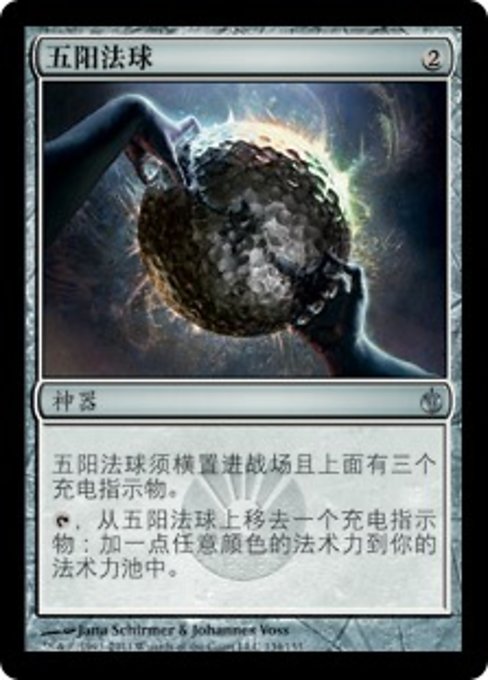 Shared character: 法
Sphere of the Suns
五陽法球
Shared character: 法
Sphere of the Suns
五陽法球
 Akrasan Squire
 Angel's Herald
 Angelic Benediction
 Angelsong
 Bant Battlemage
 Battlegrace Angel
 Cradle of Vitality
 Dispeller's Capsule