
Chinese Card Identity Explorer
Forced March — 强行军
Explore Forced March in Chinese across 1 printings and 1 sets, with Traditional and Simplified Chinese versions, card text, artwork and release details.
- 1Total Chinese printings
- 1ZHTTraditional Chinese
- 0ZHSSimplified Chinese
- 1Sets
- 1999Chinese history
Card overview
- Mana cost
- {X}{B}{B}{B}
- Card type
- Sorcery
- Latest rarity
- Rare
Oracle text
Destroy all creatures with mana value X or less.
Flavor text
卡特蓝将这视为是一种筛选方式,毕竟死人是不会反驳的。
Chinese printing milestones
These milestones are calculated from the Chinese printings currently recorded in the CTG database.
ZHT
强行军
ZHS
—
Chinese names and language variants
The same Magic card may have different printed names or wording between Traditional and Simplified Chinese editions. The versions below preserve the name and text printed on each physical card.
Traditional Chinese
强行军
Simplified Chinese
No Simplified Chinese printed name recorded.
Traditional Chinese name history
- 强行军 Mercadian Masques (MMQ)
1 distinct printed name(s) · 1 distinct printed-text version(s)
Simplified Chinese name history
No printed-name history recorded for this script.
Traditional vs Simplified Chinese
Compare matching Chinese printings by set and collector number. Missing cells indicate that the corresponding printing is not currently recorded in the database.
Mercadian Masques
MMQ · #136
Not recorded
Chinese printing timeline
A compact chronological view of every Traditional and Simplified Chinese printing recorded for this card identity.
Sets featuring this card in Chinese
All Chinese printings
Traditional Chinese
强行军
Forced March
- Collector number
- 136
- Rarity
- Rare
- Released
巫术
Other cards with this Chinese name or character
Exact printed-name matches are shown first, followed by other Chinese card identities sharing characters with this card’s recorded Chinese names.
 Shared character: 军
Foot Soldiers
步行军队
Shared character: 军
Foot Soldiers
步行军队
 Shared character: 军
Bloodbond March
血脉行军
Shared character: 军
Bloodbond March
血脉行军
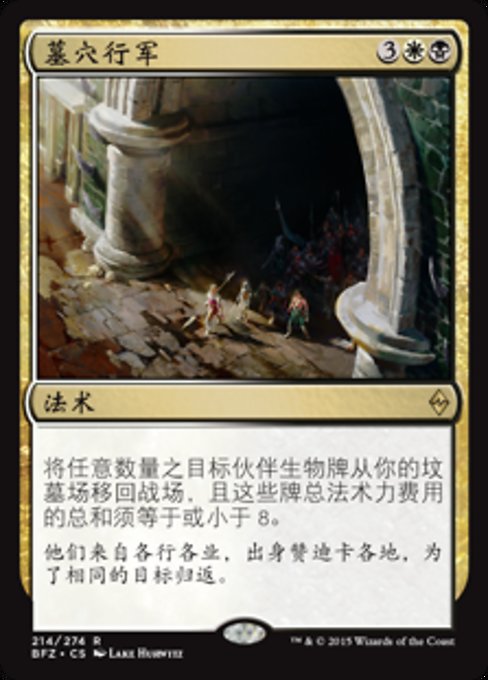 Shared character: 军
March from the Tomb
墓穴行軍
Shared character: 军
March from the Tomb
墓穴行軍
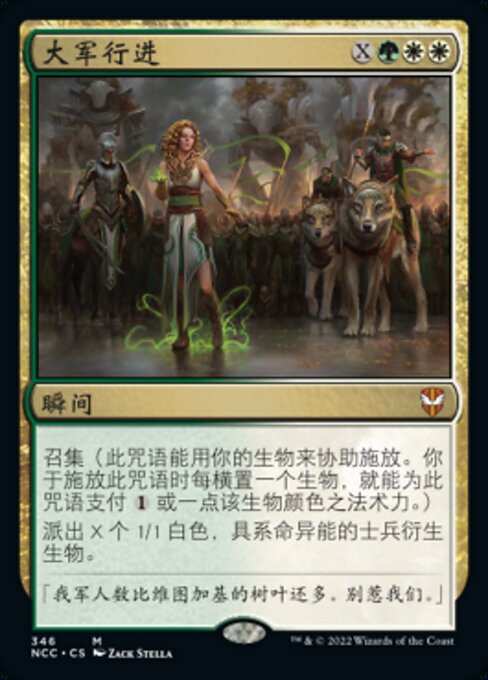 Shared character: 军
March of the Multitudes
大軍行進
Shared character: 军
March of the Multitudes
大軍行進
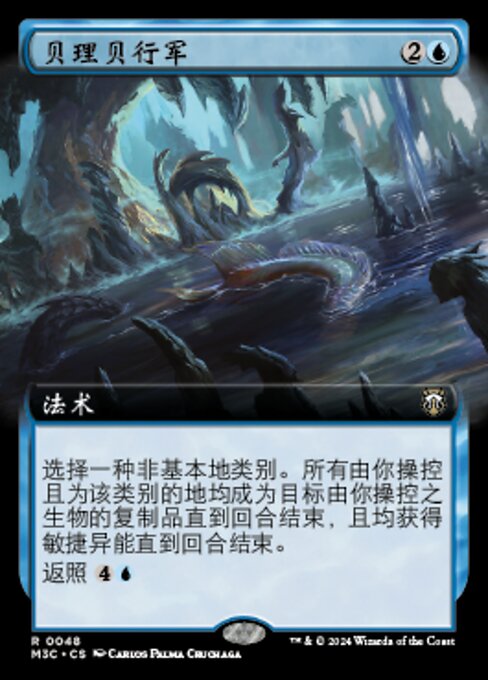 Shared character: 军
March from Velis Vel
贝理贝行军
Shared character: 军
March from Velis Vel
贝理贝行军
 Shared character: 强
Giant Strength
能力增强
Shared character: 强
Giant Strength
能力增强
 Shared character: 军
Keldon Warlord
凯尔顿军阀
Shared character: 军
Keldon Warlord
凯尔顿军阀
 Shared character: 军
Orcish Oriflamme
半兽人的军旗
Shared character: 军
Orcish Oriflamme
半兽人的军旗
 Shared character: 军
Phantasmal Forces
幻象军团
Shared character: 军
Phantasmal Forces
幻象军团
 Shared character: 行
Creeping Mold
爬行腐霉
Shared character: 行
Creeping Mold
爬行腐霉
 Shared character: 行
Phyrexian Walker
非瑞克西亚步行机
Shared character: 行
Phyrexian Walker
非瑞克西亚步行机
 Shared character: 军
Resistance Fighter
反抗军斗士
Shared character: 军
Resistance Fighter
反抗军斗士
 Afterlife
 Alabaster Wall
 Armistice
 Arrest
 Ballista Squad
 Charm Peddler
 Charmed Griffin
 Cho-Arrim Alchemist