
Chinese Card Identity Explorer
Terashi's Cry — 照罗至之吼
Explore Terashi's Cry in Chinese across 1 printings and 1 sets, with Traditional and Simplified Chinese versions, card text, artwork and release details.
- 1Total Chinese printings
- 0ZHTTraditional Chinese
- 1ZHSSimplified Chinese
- 1Sets
- 2004Chinese history
Card overview
- Mana cost
- {3}{W}
- Card type
- Sorcery — Arcane
- Latest rarity
- Common
Oracle text
Tap up to three target creatures.
Flavor text
「太阳神让人看了就害怕。他生气时,最好快快躲好并祈求原谅。」\n~金尾师范
Chinese printing milestones
These milestones are calculated from the Chinese printings currently recorded in the CTG database.
ZHT
—
ZHS
照罗至之吼
Chinese names and language variants
The same Magic card may have different printed names or wording between Traditional and Simplified Chinese editions. The versions below preserve the name and text printed on each physical card.
Traditional Chinese
No Traditional Chinese printed name recorded.
Simplified Chinese
照罗至之吼
Traditional Chinese name history
No printed-name history recorded for this script.
Simplified Chinese name history
- 照罗至之吼 Champions of Kamigawa (CHK)
1 distinct printed name(s) · 1 distinct printed-text version(s)
Traditional vs Simplified Chinese
Compare matching Chinese printings by set and collector number. Missing cells indicate that the corresponding printing is not currently recorded in the database.
Champions of Kamigawa
CHK · #47
Not recorded
Chinese printing timeline
A compact chronological view of every Traditional and Simplified Chinese printing recorded for this card identity.
Sets featuring this card in Chinese
All Chinese printings
Simplified Chinese
照罗至之吼
Terashi's Cry
- Collector number
- 47
- Rarity
- Common
- Released
法术~古咒
Other cards with this Chinese name or character
Exact printed-name matches are shown first, followed by other Chinese card identities sharing characters with this card’s recorded Chinese names.
 Shared character: 之
Terashi's Grasp
照罗至之攫
Shared character: 之
Terashi's Grasp
照罗至之攫
 Shared character: 照
Terashi's Verdict
照罗至的裁定
Shared character: 照
Terashi's Verdict
照罗至的裁定
 Shared character: 之
Howl from Beyond
彼方之吼
Shared character: 之
Howl from Beyond
彼方之吼
 Shared character: 之
Roar of Jukai
树海之吼
Shared character: 之
Roar of Jukai
树海之吼
 Shared character: 之
Tomb of Urami
乌罗未之墓
Shared character: 之
Tomb of Urami
乌罗未之墓
 Shared character: 之
Roar of the Crowd
群众之吼
Shared character: 之
Roar of the Crowd
群众之吼
 Shared character: 之
Howl of the Night Pack
夜狼群之吼
Shared character: 之
Howl of the Night Pack
夜狼群之吼
 Shared character: 之
Traitor's Roar
叛徒之吼
Shared character: 之
Traitor's Roar
叛徒之吼
 Shared character: 之
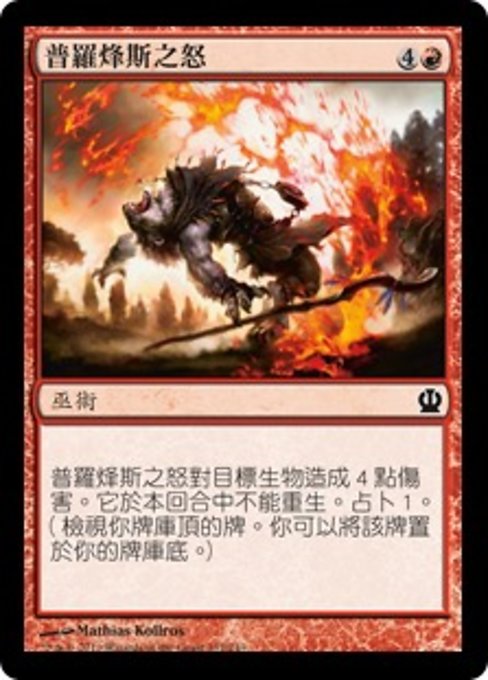
Rage of Purphoros
普羅烽斯之怒
Shared character: 之
Rage of Purphoros
普羅烽斯之怒
 Shared character: 之
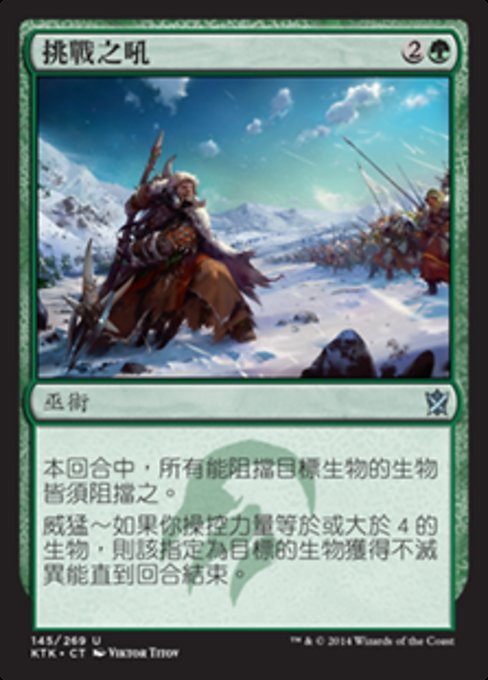
Roar of Challenge
挑戰之吼
Shared character: 之
Roar of Challenge
挑戰之吼
 Shared character: 之
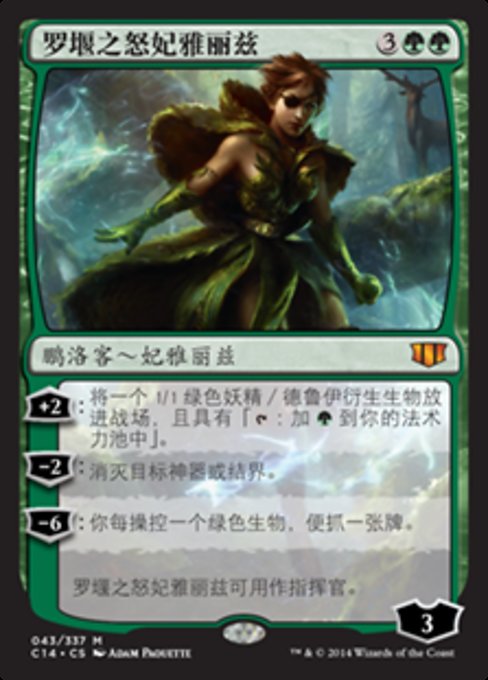
Freyalise, Llanowar's Fury
罗堰之怒妃雅丽兹
Shared character: 之
Freyalise, Llanowar's Fury
罗堰之怒妃雅丽兹
 Shared character: 之
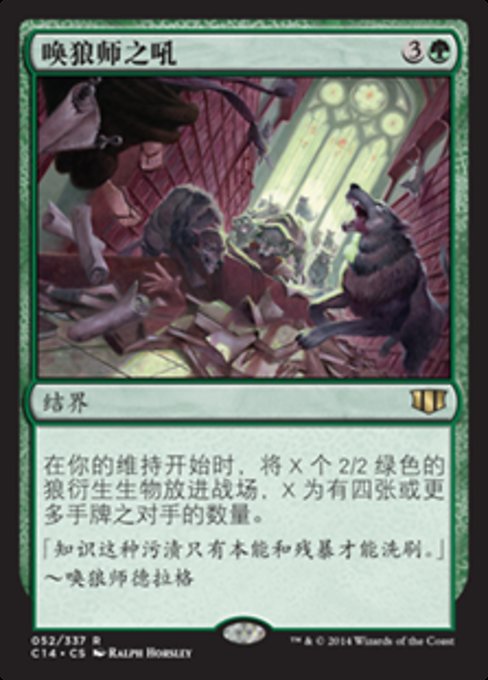
Wolfcaller's Howl
唤狼师之吼
Shared character: 之
Wolfcaller's Howl
唤狼师之吼
 Blessed Breath
 Cage of Hands
 Call to Glory
 Candles' Glow
 Cleanfall
 Devoted Retainer
 Eight-and-a-Half-Tails
 Ethereal Haze