
Chinese Card Identity Explorer
Moorish Cavalry — 摩尔骑兵
Explore Moorish Cavalry in Chinese across 1 printings and 1 sets, with Traditional and Simplified Chinese versions, card text, artwork and release details.
- 1Total Chinese printings
- 0ZHTTraditional Chinese
- 1ZHSSimplified Chinese
- 1Sets
- 2006Chinese history
Card overview
- Mana cost
- {2}{W}{W}
- Card type
- Creature — Human Knight
- Latest rarity
- Special
Oracle text
Trample
Flavor text
摩尔骑兵的精英对其座骑相当讲究,只挑选血统数代以来未曾混杂者。
Chinese printing milestones
These milestones are calculated from the Chinese printings currently recorded in the CTG database.
ZHT
—
ZHS
摩尔骑兵
Chinese names and language variants
The same Magic card may have different printed names or wording between Traditional and Simplified Chinese editions. The versions below preserve the name and text printed on each physical card.
Traditional Chinese
No Traditional Chinese printed name recorded.
Simplified Chinese
摩尔骑兵
Traditional Chinese name history
No printed-name history recorded for this script.
Simplified Chinese name history
- 摩尔骑兵 Time Spiral Timeshifted (TSB)
1 distinct printed name(s) · 1 distinct printed-text version(s)
Traditional vs Simplified Chinese
Compare matching Chinese printings by set and collector number. Missing cells indicate that the corresponding printing is not currently recorded in the database.
Time Spiral Timeshifted
TSB · #11
Not recorded
Chinese printing timeline
A compact chronological view of every Traditional and Simplified Chinese printing recorded for this card identity.
Sets featuring this card in Chinese
All Chinese printings
Simplified Chinese
摩尔骑兵
Moorish Cavalry
- Collector number
- 11
- Rarity
- Special
- Released
生物~人类/骑士
Other cards with this Chinese name or character
Exact printed-name matches are shown first, followed by other Chinese card identities sharing characters with this card’s recorded Chinese names.
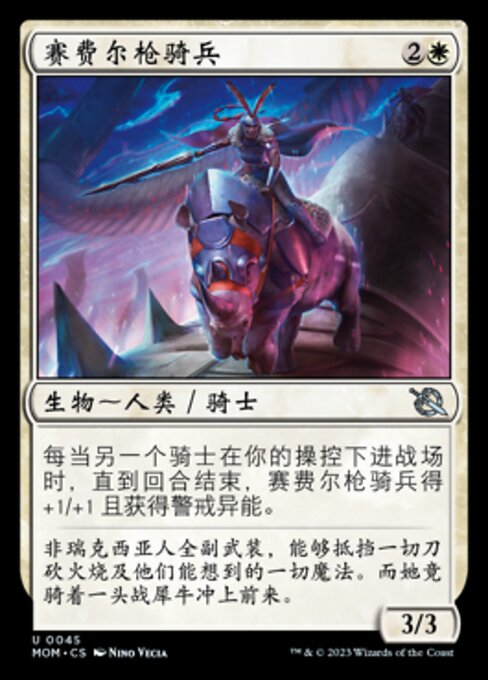 Shared character: 兵
Zhalfirin Lancer
赛费尔枪骑兵
Shared character: 兵
Zhalfirin Lancer
赛费尔枪骑兵
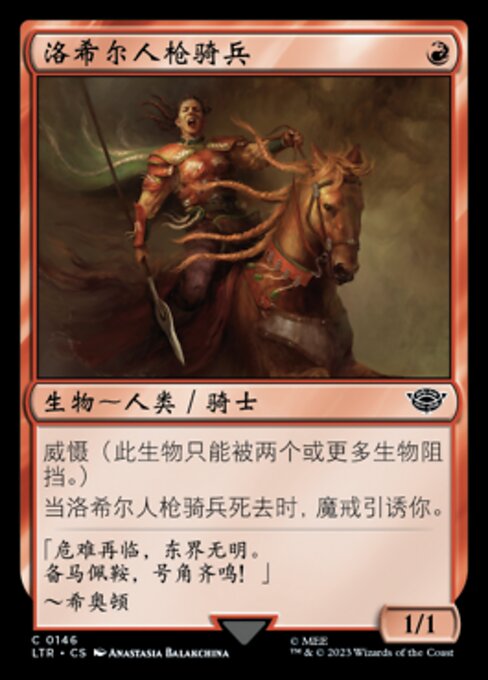 Shared character: 兵
Rohirrim Lancer
洛希尔人枪骑兵
Shared character: 兵
Rohirrim Lancer
洛希尔人枪骑兵
 Shared character: 尔
Erg Raiders
尔格骑队
Shared character: 尔
Erg Raiders
尔格骑队
 Shared character: 兵
Goblin Swine-Rider
鬼怪猪骑兵
Shared character: 兵
Goblin Swine-Rider
鬼怪猪骑兵
 Shared character: 兵
Suq'Ata Lancer
舒夸塔的枪骑兵
Shared character: 兵
Suq'Ata Lancer
舒夸塔的枪骑兵
 Shared character: 兵
Mercenary Knight
佣兵骑士
Shared character: 兵
Mercenary Knight
佣兵骑士
 Shared character: 兵
Lancers en-Kor
寇族枪骑兵
Shared character: 兵
Lancers en-Kor
寇族枪骑兵
 Shared character: 尔
Viashino Outrider
凡尔西诺骑从
Shared character: 尔
Viashino Outrider
凡尔西诺骑从
 Shared character: 兵
Wu Elite Cavalry
吴国精锐骑兵
Shared character: 兵
Wu Elite Cavalry
吴国精锐骑兵
 Shared character: 兵
Wu Light Cavalry
吴国轻骑兵
Shared character: 兵
Wu Light Cavalry
吴国轻骑兵
 Shared character: 兵
Yellow Scarves Cavalry
黄巾贼骑兵
Shared character: 兵
Yellow Scarves Cavalry
黄巾贼骑兵
 Shared character: 兵
Jhovall Rider
六足豹骑兵
Shared character: 兵
Jhovall Rider
六足豹骑兵
 Akroma, Angel of Wrath
 Auratog
 Celestial Dawn
 Consecrate Land
 Defiant Vanguard
 Disenchant
 Enduring Renewal
 Essence Sliver