
Chinese Card Identity Explorer
Lagac Lizard — 勒嘎蜥蜴
Explore Lagac Lizard in Chinese across 1 printings and 1 sets, with Traditional and Simplified Chinese versions, card text, artwork and release details.
- 1Total Chinese printings
- 0ZHTTraditional Chinese
- 1ZHSSimplified Chinese
- 1Sets
- 2010Chinese history
Card overview
- Mana cost
- {3}{R}
- Card type
- Creature — Lizard
- Latest rarity
- Common
Flavor text
勒嘎蜥蜴的祖先可以追溯到赞迪卡最早的生命型态;他们看着鹏洛客与奥札奇来来去去,以及吸血鬼部族的兴盛,但没有一个能改变他们分毫。
Chinese printing milestones
These milestones are calculated from the Chinese printings currently recorded in the CTG database.
ZHT
—
ZHS
勒嘎蜥蜴
Chinese names and language variants
The same Magic card may have different printed names or wording between Traditional and Simplified Chinese editions. The versions below preserve the name and text printed on each physical card.
Traditional Chinese
No Traditional Chinese printed name recorded.
Simplified Chinese
勒嘎蜥蜴
Traditional Chinese name history
No printed-name history recorded for this script.
Simplified Chinese name history
- 勒嘎蜥蜴 Rise of the Eldrazi (ROE)
1 distinct printed name(s) · 0 distinct printed-text version(s)
Traditional vs Simplified Chinese
Compare matching Chinese printings by set and collector number. Missing cells indicate that the corresponding printing is not currently recorded in the database.
Rise of the Eldrazi
ROE · #154
Not recorded
勒嘎蜥蜴
生物~蜥蜴 View printing
Chinese printing timeline
A compact chronological view of every Traditional and Simplified Chinese printing recorded for this card identity.
Sets featuring this card in Chinese
All Chinese printings
Simplified Chinese
勒嘎蜥蜴
Lagac Lizard
- Collector number
- 154
- Rarity
- Common
- Released
生物~蜥蜴
Other cards with this Chinese name or character
Exact printed-name matches are shown first, followed by other Chinese card identities sharing characters with this card’s recorded Chinese names.
 Shared character: 蜥
Lizard Warrior
蜥蜴战士
Shared character: 蜥
Lizard Warrior
蜥蜴战士
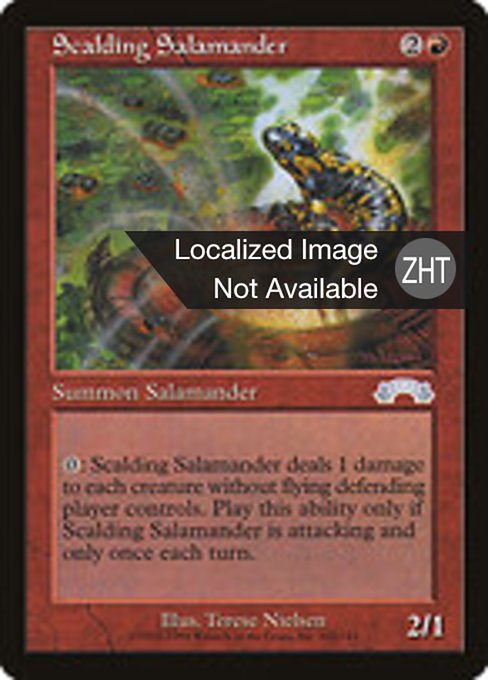 Shared character: 蜥
Scalding Salamander
灼烫火蜥蜴
Shared character: 蜥
Scalding Salamander
灼烫火蜥蜴
 Shared character: 蜥
Vug Lizard
凡格蜥蜴
Shared character: 蜥
Vug Lizard
凡格蜥蜴
 Shared character: 蜥
Brooding Saurian
护窝蜥蜴
Shared character: 蜥
Brooding Saurian
护窝蜥蜴
 Shared character: 蜥
Skitter of Lizards
掠行蜥蜴
Shared character: 蜥
Skitter of Lizards
掠行蜥蜴
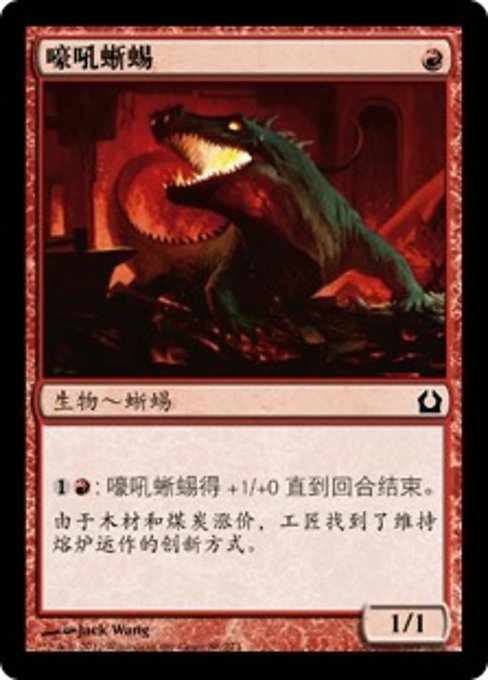 Shared character: 蜥
Bellows Lizard
嚎吼蜥蜴
Shared character: 蜥
Bellows Lizard
嚎吼蜥蜴
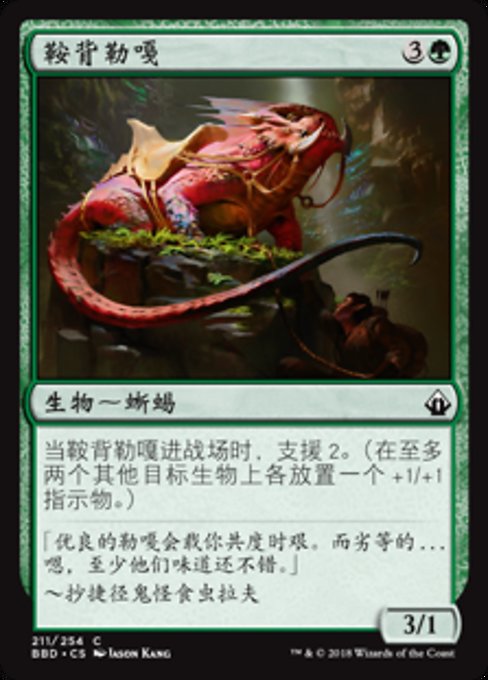 Shared character: 勒
Saddleback Lagac
鞍背勒嘎
Shared character: 勒
Saddleback Lagac
鞍背勒嘎
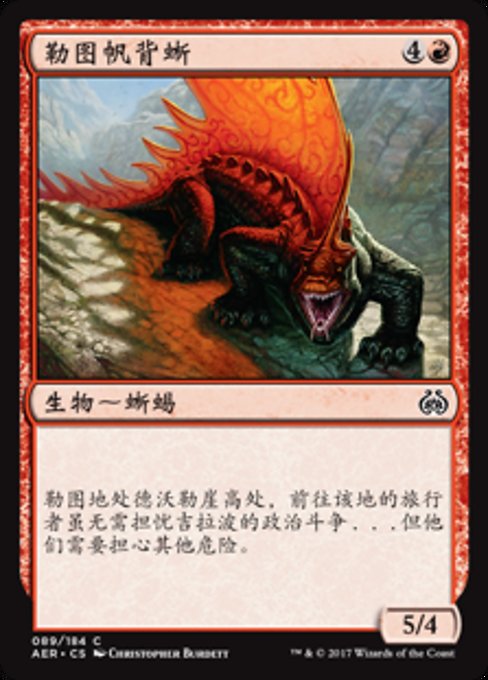 Shared character: 勒
Lathnu Sailback
勒圖帆背蜥
Shared character: 勒
Lathnu Sailback
勒圖帆背蜥
 Shared character: 勒
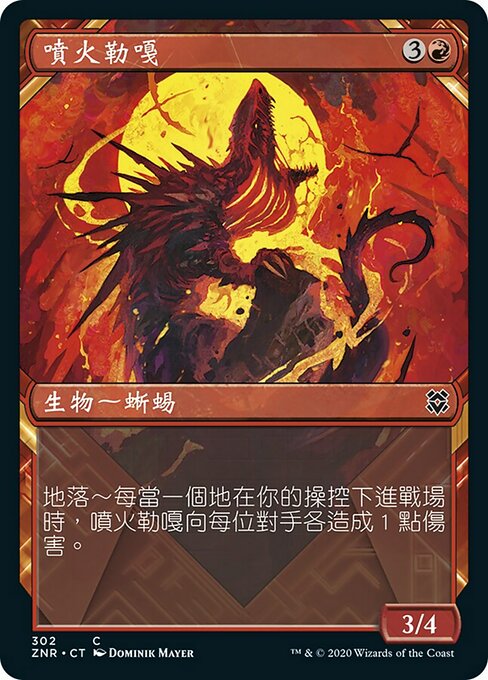
Spitfire Lagac
噴火勒嘎
Shared character: 勒
Spitfire Lagac
噴火勒嘎
 Shared character: 勒
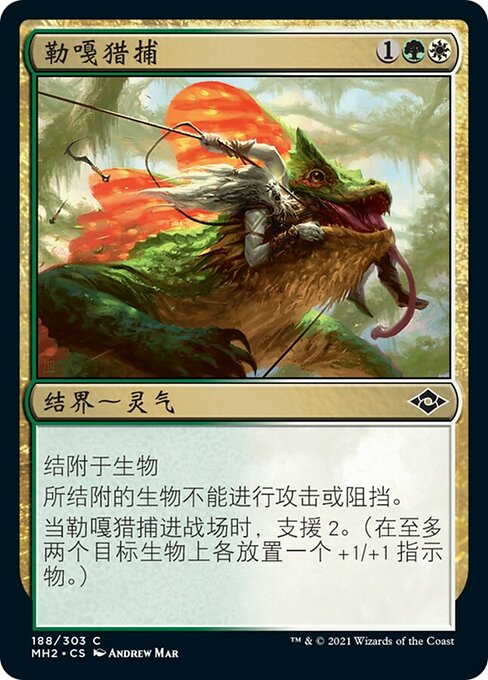
Captured by Lagacs
勒嘎獵捕
Shared character: 勒
Captured by Lagacs
勒嘎獵捕
 Shared character: 蜥
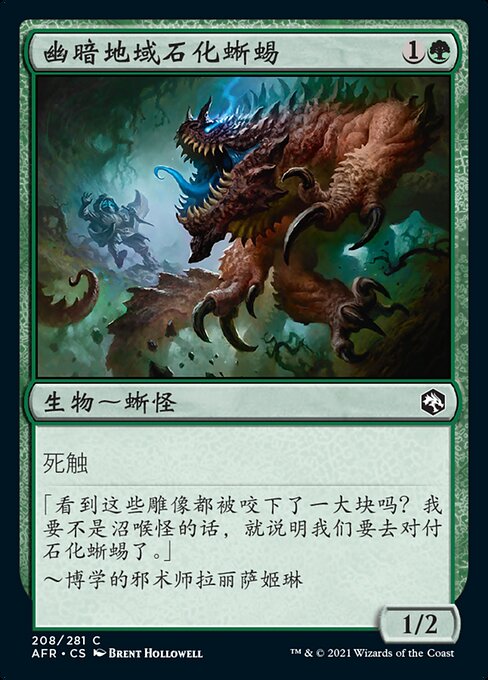
Underdark Basilisk
幽暗地域石化蜥蜴
Shared character: 蜥
Underdark Basilisk
幽暗地域石化蜥蜴
 Shared character: 蜥
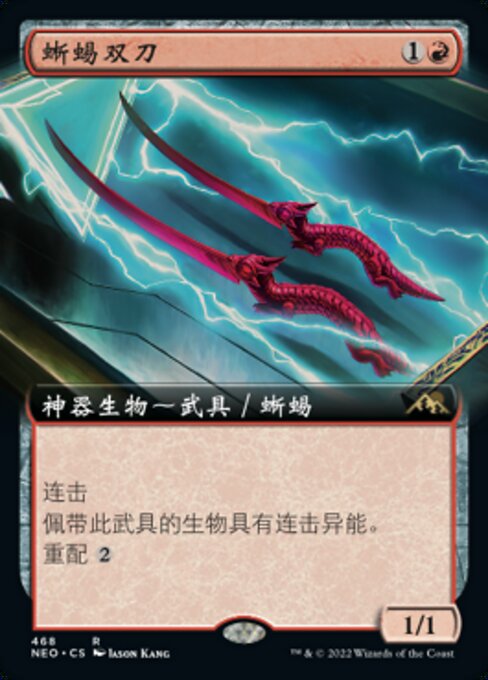
Lizard Blades
蜥蜴雙刀
Shared character: 蜥
Lizard Blades
蜥蜴雙刀
 All Is Dust
 Artisan of Kozilek
 Eldrazi Conscription
 Emrakul, the Aeons Torn
 Hand of Emrakul
 Kozilek, Butcher of Truth
 It That Betrays
 Not of This World